The Wrist Gap Fix: Winter Gloves That Work With Real Coat Sleeves
Photo: Tobias ToMar Maier, CC BY-SA 3.0, via Wikimedia Commons
Gloves are the last thing most of us buy and the first thing we regret. You spend weeks finding a coat that sits right at the shoulder, then reach for a pair of gloves that bunch at the cuff, leave a strip of wrist exposed to a November wind, or make your sleeve look like it has been stuffed with a spare pair of socks. The problem is rarely the glove on its own. It is the glove plus the sleeve.
That is why the most useful winter glove advice starts not in the accessories aisle but in the hallway mirror. Put your coat on. Look at where the sleeve ends. Then choose the glove. It sounds obvious, but it is the difference between hands that feel sorted and hands that feel like an afterthought.
Start with the sleeve, not the glove
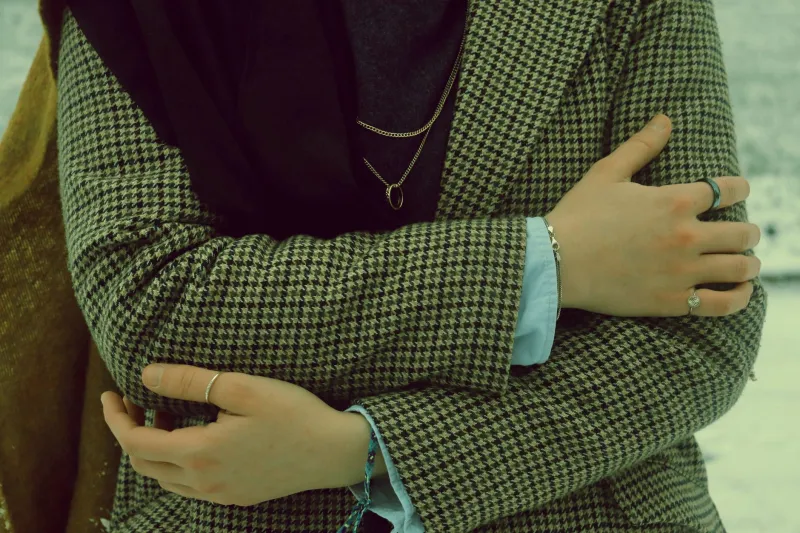
If your coat sleeve finishes at the wrist bone, you have room for a neat knitted cuff. A slim glove that sits just underneath the sleeve will look tidy and keep the cold out without adding bulk. If your sleeve stops short — a bracelet-length wool coat, a bomber, a cropped puffer — you need a glove that reaches back towards the watch strap rather than one that stops at the palm. And if your sleeve is generously long, a simple glove that tucks underneath will always look cleaner than a chunky cuff fighting for space.
The goal is not to match everything perfectly. It is to avoid the awkward handshake between glove and sleeve where neither knows who is in charge.
The three cuff rules worth remembering
- Long sleeve, slim glove. Let the coat do the covering. A fine knit or soft leather glove that disappears under the cuff is the easiest option with a tailored coat, a trench or a long wool overcoat.
- Short sleeve, longer glove. If the sleeve stops before your wrist, the glove has to bridge the gap. Look for a cuff that reaches two or three centimetres past the wrist bone. A knitted turn-back cuff or a leather glove with a slightly longer cut will do the job without looking surgical.
- Chunky knit sleeve, simple glove. A thick ribbed cuff on a jumper or coat does not need competition. Keep the glove close-fitting and plain. A contrast colour is fine; a second chunky cuff is not.
Touchscreen knits: the sensible default
For most British winter days, a touchscreen-friendly knit is the pair you will actually wear. They are warm enough for the school run, forgiving over a shirt cuff and easy to stuff in a pocket when the bus finally arrives. The trick is to check the fingertips before you commit: some pairs only have conductive yarn on the thumb and index finger, which is fine until you need to answer a call with your other hand. Look for both thumbs and at least two fingers, and avoid gloves so thick that you have to take them off to type anyway.
Uniqlo's Heattech knitted gloves are a reliable high-street staple, and M&S does a good cashmere-blend touchscreen pair that feels smarter than the price suggests. Both work best with a coat sleeve that ends at the wrist, or with a knit cuff you can tuck them under.
Leather that handles drizzle, not a downpour
Leather gloves look instantly pulled together, but British weather is not a leather-glove fantasy. A treated leather pair will cope with a damp walk to the station and a cold platform; it will not enjoy a proper soaking. Suede is best saved for dry, cold days and the walk from car to door.
Look for a leather glove with a soft lining — cashmere or a thin fleece — and a cuff that is long enough to meet your sleeve. John Lewis does a dependable leather glove with a cashmere lining, and H&M's faux-leather pairs are a low-risk way to try the look. If they get damp, let them dry naturally away from a radiator. Leather that dries too fast goes stiff and cracked, and no amount of styling can fix that.
Five high-street pairs that earn their hallway space
- M&S cashmere-blend touchscreen gloves. Soft, warm and smart enough for a lunch meeting. Best with a long coat sleeve or a fine knit cuff.
- Uniqlo Heattech knitted gloves. The practical everyday pair. Thin enough to tuck under a bracelet-length sleeve without a fight.
- John Lewis leather gloves with cashmere lining. The smarter option for dry cold days. Choose a cuff that reaches past the wrist if your coat sleeve is short.
- H&M faux-leather gloves. A good trial pair for the leather look. Keep them for drizzle, not a downpour, and check the fingertip touchscreen panels before you buy.
- Next knitted gloves with a turn-back cuff. The gap-filler. The longer cuff bridges the space between a short sleeve and a cold wrist, and the knit is soft enough to wear with a chunky coat.
The wrist gap, solved
If you already own a pair you like but the wrist still feels exposed, you have options. Wear the glove cuff over the sleeve rather than under it — it looks deliberate with a slim knit and keeps the wind out. Add a thin wrist warmer or a pair of cotton liner gloves underneath for an extra layer without bulk. Or choose a coat with a ribbed inner cuff, which does the same job invisibly.
Colour is your friend here. A glove that tones with your coat reads as part of the outfit; a glove that matches your scarf looks intentional. A bright pair is fun, but it will draw attention to the wrist gap if the fit is not right. Get the length sorted first, then play with colour.
Fit, care and the one-minute check
Measure around the widest part of your hand, just below the knuckles, and try gloves on with your coat sleeve. If the glove feels tight across the palm, size up — cold hands are worse than a slightly roomy cuff. Wash knitted gloves cool and reshape them flat, and keep leather away from radiators. A little care means they will still look presentable in February, when every other winter accessory has given up.
The best winter glove is the one you do not have to think about. It meets your sleeve, keeps the wind off your wrists and lets you answer your phone without exposing a hand to the elements. Start with the sleeve, choose the cuff, then worry about the colour. Your future self at the bus stop will thank you.