The Ankle Is the Tell: Styling the Sock Gap for a British Winter
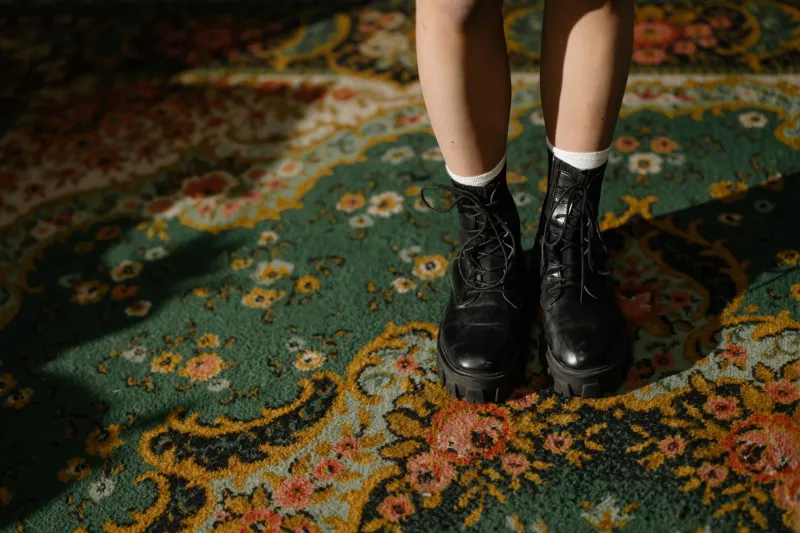
You can leave the house feeling fairly pleased with yourself: coat doing its job, trousers pressed, boots broken in. Then you sit down on the bus, cross your legs, and there it is — a pale strip of ankle between hem and shoe, looking less like a deliberate styling choice and more like something you forgot to finish. The sock gap is one of those tiny details that rarely gets its own mirror check, yet it quietly sets the tone for the whole outfit. Get it right and nobody notices. Get it wrong and the eye keeps returning to it, like a picture hanging slightly crooked.
The gap is a design decision, not an accident
High-street trousers are not cut for one body, one shoe or one commute. A pair that sits neatly on the model in the lookbook can ride up when you walk, bunch when you sit, or stop a centimetre short of where you expected. Add winter boots, a thicker sock, or a trainer with a slightly lower profile, and the ankle becomes a visible part of the outfit whether you planned for it or not.
The practical approach is to stop treating socks as underwear for feet and start treating them as the last layer of the look. Before you leave, ask three questions: what will actually show when I stand, sit and walk? What colour will that strip of sock read against my trousers and shoes? And is the thickness helping the silhouette or fighting it?
Match, bridge, or make it deliberate
There are three reliable routes through the sock gap. The first is to match the trouser. Dark grey trousers with dark grey socks, navy with navy, black with black. This keeps the line long and the outfit quiet. It is especially useful with cropped or slightly short hems, because the sock effectively continues the leg rather than interrupting it.
The second is to match the shoe or boot. Black leather boots with black socks, brown lace-ups with a deep brown or charcoal sock, dark trainers with a dark crew sock. This gives a clean, grounded finish and works well when the trouser is a different colour from the footwear. The sock becomes a bridge rather than a separate statement.
The third route is contrast — but only when you mean it. A cream ribbed sock with a dark loafer can look considered. A bright sock peeking above a trainer can be a nice bit of personality. What rarely works is the accidental contrast: a white sports sock appearing under a smart wool coat, or a pale ankle sock flashing below tailored trousers in February. If the sock is visible, it should look like it was invited.
Weight and ribbing do the quiet work
Sock thickness changes how trousers hang and how shoes fit. Fine-gauge merino or a smooth cotton-blend sock is the safer choice under slim trousers and sleek ankle boots, because it adds warmth without bulk. A chunky ribbed sock is better with wide-leg cropped trousers, relaxed denim and lace-up boots, where a bit of texture at the ankle looks intentional rather than squeezed in.
Ribbing is useful, too. A subtle rib adds structure and stops a sock looking like a stray piece of underwear. But watch the circumference: a sock that is too thick can turn a sleek trainer into a stuffed shoe, while a sock that is too thin can slide down inside a boot and leave you adjusting it at the worst possible moment. Look for socks that grip gently at the calf without leaving a mark.
The trouser-hem test
Try the whole outfit on properly — not just standing in front of the mirror, but sitting on the edge of the bed, crossing your legs, and walking across the room. Check the ankle from the side as well as the front. If the hem is cropped, decide whether the sock is part of the look. With cropped wide-leg trousers and chunky boots, a visible ribbed sock can be a good finishing detail. With slim cropped trousers and loafers, a sock in the same tonal family as the trouser will usually look cleaner.
If you are wearing boots, make sure the sock is tall enough to stay up when you pull the boot on and off. There is little point in a beautiful merino sock that disappears below the boot shaft the moment you start walking.
Quick fixes for cropped hems and cold commutes
Not every hem needs a tailor. If a pair of trousers sits just a little short, a sock in the same colour as the trouser can visually drop the hem by a centimetre or two. Tights under cropped trousers can also work in cold weather, especially with loafers or ankle boots, as long as the tone is close to the trouser or deliberately dark.
For the commute, keep a spare pair of socks at your desk or in your bag. Damp pavements and cold platforms are not kind to cotton, and a wool-blend sock will keep its shape better through a long walk. If you swap shoes at the office, keep a smarter pair of socks with the desk shoes so the ankle stays resolved when the trainers come off.
And if you are genuinely committed to ankle socks in winter, at least choose a pair that sits high enough not to vanish when you walk. The cold is one thing; the flash of bare skin under a winter coat is another.
A small edit, not a new wardrobe
The sock gap is one of the cheapest fixes in styling. You do not need new trousers or new boots — just a few pairs of socks chosen with the same care as a scarf or a belt. Audit the drawer, keep the pairs that match your most-worn trousers and boots, and add one ribbed pair for texture and one fine wool pair for cold days. After that, the ankle stops being an afterthought and starts doing its quiet job: finishing the outfit, keeping you warm, and making the whole thing look as though you meant it.