Two Buttons Undone: The Cardigan Edit for Days a Jumper Feels Like Too Much

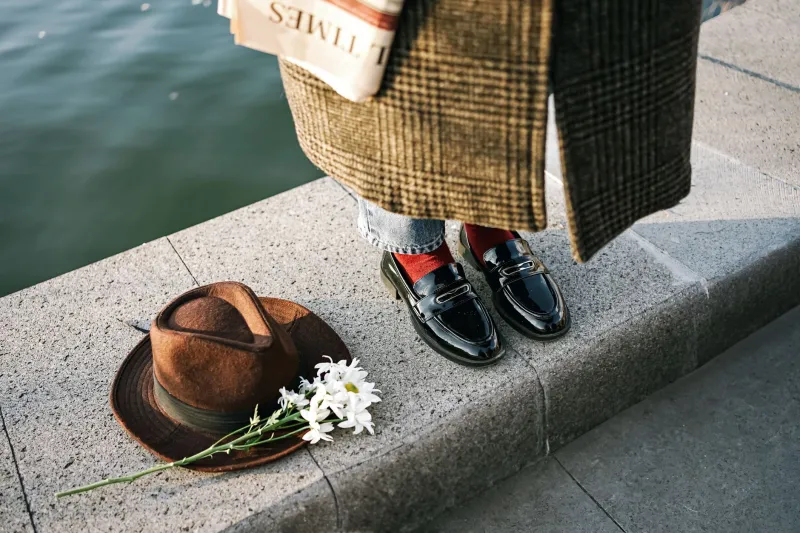
Photo by Photo by Tom Grünbauer on Unsplash on Unsplash
There is a moment in every British winter — usually around 2pm, usually on a bus with the heating turned up to tropical — when your jumper becomes a decision you regret. Too warm to keep on, too cold to take off, and far too bulky to stuff into a tote bag. This is the exact gap the button-through cardigan was invented to fill, and it is why the piece deserves rather more respect than it currently gets.
The cardigan has spent a decade as the layer people fall back on when they have given up. Grey, shapeless, permanently draped over the back of a chair. But a properly cut one does something a jumper simply cannot: it lets you adjust. Two buttons undone and it reads as a light jacket. Done all the way up with a collar poking out and it behaves like a shirt. Worn open over a dress, it creates two clean vertical lines down the body.
Why the jumper keeps losing
A jumper commits. You put it on at 8am when it is four degrees and you are still wearing it at 3pm in a meeting room with the radiator going. Most of us respond by buying thinner knits than we actually need, then being cold on the walk home. The cardigan sidesteps the whole argument by refusing to be a single temperature.
There is a silhouette question too. A jumper adds bulk at the waist, which is fine with wide trousers and less fine with a pencil skirt or a knit dress. A cardigan worn open breaks up the middle of the body instead of adding to it.
Fit matters more than the yarn
Before you look at colour, look at the shoulder. The seam should sit on your shoulder, not hang past it. Anything wider than your own shoulder line starts to look like something borrowed from a taller relative, and no amount of styling rescues it.
Next, close the cardigan and pinch the fabric at the side seam. You want roughly an inch of give — enough to layer over a shirt without the buttons pulling, not so much that it billows when you move. One worn open over a dress can afford to be generous; one worn buttoned under a coat needs to be trim.
Then the sleeve. It should end at the wrist bone, and the cuff should be snug enough to stay there when you push it up. Ribbed cuffs do this far better than raw hems. If you habitually shove sleeves up over a shirt, look for a deeper cuff — it holds the fold.
Finally, the armhole. High and neat keeps the shape; low and dropped makes the whole thing feel like loungewear. Check this before anything else, because it is the one detail you cannot fix later with clever styling.
Where the hem should stop
Hip bone is the safest length, and the one that works over almost everything — shirts, midi dresses, straight jeans. It also gives you the option of leaving the bottom button undone to show the shape underneath.
Mid-hip is the workhorse: long enough to cover the waistband of a jean, short enough to sit under a coat without a fight.
Longline is the one to handle with care. A long cardigan only works over a layer that stays close to the body — a fine merino roll neck, a slip dress, slim trousers. Put it over a wide trouser and a chunky knit and the whole look collapses into one soft, undifferentiated shape.
Three outfits that do the work
Over a shirt. Collar outside, cuffs showing by a centimetre, only the middle two buttons done up. Dark straight jeans and a loafer. This is the outfit for the office on a day you suspect the boiler is on the blink.
Over a dress. A knit dress or a heavier midi, cardigan open with the sleeves pushed to the elbow. It stops a spring-weight dress being packed away in October. If the dress is printed, pull the cardigan colour from one of the smaller colours in the pattern rather than the most obvious one.
Over a fine knit. A thin merino roll neck underneath, a chunkier cardigan on top, fully buttoned. Two knits is genuinely fine provided the inner one is thin and sits flat. Both should be smooth where they meet — a cable knit over a cable knit looks lumpy and feels worse.
The 2026 high-street edit
M&S — the lambswool crew-neck cardigan is the dependable plain one. Try a size down if you want it to sit neatly under a coat.
Uniqlo — its merino styles are the best value for a thin, non-bulky layer, and they layer beautifully over shirts.
COS — the place for a slightly longer, cleaner shape in a wool blend. Expensive, but the cut is doing the work.
Arket — good for a boxy, cropped cardigan if your wardrobe leans towards wide trousers.
John Lewis — own-label knitwear is quietly underrated, particularly at the soft merino end of the market.
H&M — worth a look for a chunky ribbed style to wear instead of a jacket on mild, damp days.
Whistles and FatFace — opposite ends of the price scale, but both good for a textured knit with real buttons rather than plastic ones.
Two practical notes
Wool or a wool blend for anything you plan to wear outdoors instead of a coat; cotton and cotton blends for the ones that live inside and get thrown over a dress. Cotton pills faster and holds less warmth, but it drapes better and is perfectly happy in a warm office.
And wash less than you think. Air it overnight, run a de-pilling comb over the underarms and sides, and only wash when it genuinely needs it. That is how a good cardigan lasts five winters rather than one.
This was never really a comeback, because the cardigan never left. It simply needs buying with the same care as a coat — and wearing with a bit of intention rather than as the thing you grab when the radiators are cold.