Good Clothes Aren't Guest-List Only: Why Tuesday Deserves Your Best Blazer

There's a particular kind of British wardrobe that lives in two halves. On one side, the everyday stuff: jeans that have been through the wash forty times, a hoodie, the trainers you actually walk in. On the other, behind a closed door or on a higher rail, the good things. The blazer. The silk skirt. The coat that cost more than the boiler service.
Those good things come out for weddings, Christmas, the occasional dinner. Which means, if you're honest, roughly nine wearings a year. Less, if the invite list is thin.
I've started to think this is the least sensible habit in dressing. Not because the clothes are precious — because they're not. They're just well-made, and well-made things get better the more you ask of them.
The save-it-for-best instinct
We inherit this from somewhere. Probably from households where the front room was kept for guests and the good china lived in a cabinet. There's a logic to it: limited supply, limited wearing, limited damage. Save the good stuff for the days that matter.
But clothes aren't china. A blazer doesn't chip. It softens at the shoulder, moulds to how you actually move, and starts to look like yours rather than like something you bought. A silk skirt that's been worn to the pub, the office and a Sunday lunch stops reading as outfit and starts reading as wardrobe.
The irony is that the pieces we save are the ones that would do the most work. A decent navy blazer can carry a whole week. A pair of proper leather shoes will outperform trainers on comfort once they've broken in. Saving them doesn't preserve them — it just means you own them without getting anything back.
What 'good' actually means
The mistake is thinking good means formal. It doesn't. Good means the fabric has some weight to it, the seams are tidy, the shape is doing something deliberate. A heavy cotton shirt from Uniqlo can be good. A & Other Stories wool coat can be good. A Whistles silk skirt bought in a sale can be very good indeed.
Good is also not the same as precious. Precious clothes need minding — dry cleaning, careful sitting, a nervousness about the whole enterprise. Good clothes can take a Tuesday. That's the test, really: can I wear this on a day when nothing is happening, and does it make the day slightly better?
The dress-down is the point
Here's the thing nobody tells you about wearing your best clothes more often: it only works if you knock them down a notch. Head-to-toe smart is what makes an outfit feel like an event. One smart piece against something ordinary is what makes it feel like a person.
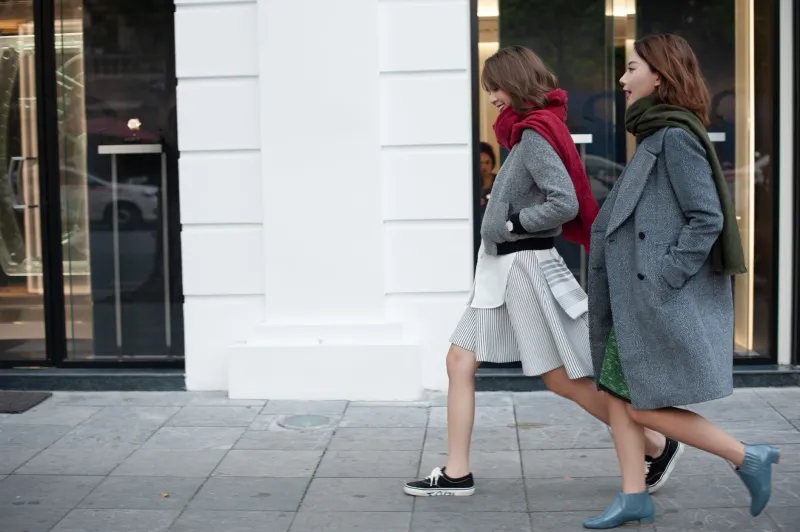
A blazer with jeans. A silk skirt with a chunky knit. Polished loafers with wide-leg trousers and a plain tee. The contrast is doing all the work, and it signals something specific: you didn't dress for an occasion, you just dress well.
Three pairings worth building a week around
The blazer and the denim. Navy or charcoal blazer, dark straight-leg jeans, white tee, leather loafers. Wear this to a meeting and then to a pub. It is, genuinely, the most useful outfit in Britain.
The silk skirt and the knit. A midi slip skirt with an oversized wool jumper and ankle boots. The trick is volume on top, slip on the bottom, and nothing else competing. It works in February and it works in a beer garden in May.
The good coat and the ordinary everything. If you own one properly nice coat, wear it over track pants and a sweatshirt on the school run. Wear it to the supermarket. The coat lifts the whole thing, and you get to feel good on a Wednesday for no reason at all.
The cost-per-wear maths is not a cliché
It's just arithmetic. A £200 blazer worn nine times a year costs £22 a wear. The same blazer worn twice a week from September to April lands somewhere near £3. That's cheaper than a coffee, and you look considerably better than the coffee.
The people who look consistently well-dressed are rarely the ones with the biggest wardrobes. They're the ones wearing the same eight or nine pieces on rotation, all of which fit properly and none of which are being rationed.
Small rules so it doesn't feel like fancy dress
- One statement, maximum. If the blazer is the moment, everything else is quiet.
- Keep the shoes everyday-real. Nothing kills a dressed-down look faster than a shoe that's clearly only for evenings.
- Let something be slightly wrong. A slouchy sleeve, an untucked shirt, a bag that isn't quite right. Polish with no friction looks like a uniform.
- Don't iron everything. A little softness reads as lived-in, which is the entire point.
- Care for it properly. Brush the coat, air the knit, take the shoes to the cobbler once a year. Looking after clothes is not the same as saving them.
A Tuesday, ideally
Try it once this week. Pick the best thing you own, build the most ordinary outfit around it, and go and do nothing much in it. Buy a coffee. Post a letter. Sit on a bus.
If it feels strange for the first ten minutes, that's not a sign you've overdressed. It's a sign you've been under-dressing your own life for years. The clothes were never the occasion. The occasion is that you put them on.